Fart Together Player Count: Our Own Readings, Not a Guess
How many people are playing Fart Together right now? Our own collector samples the Steam demo every 5 minutes and publishes every reading, including the peak, the low and the trend.
Last updated:
At our last reading the Fart Together demo had 1,684 players. The full game reports nothing yet, because Steam publishes no concurrent figure for an app before release.
- We sample the demo (app 5208630) every 5 minutes and store every reading in the repository.
- The full game (app 5117550) is not released until 29 October 2026 and its player endpoint returns no value.
- Every sample is timestamped, so you can see how old the number is instead of trusting a stale count.
Doesn't apply when: This is our own sampling of a public Steam endpoint, not an official live feed, and a two-minute window is a snapshot — not a trend you can plan around.
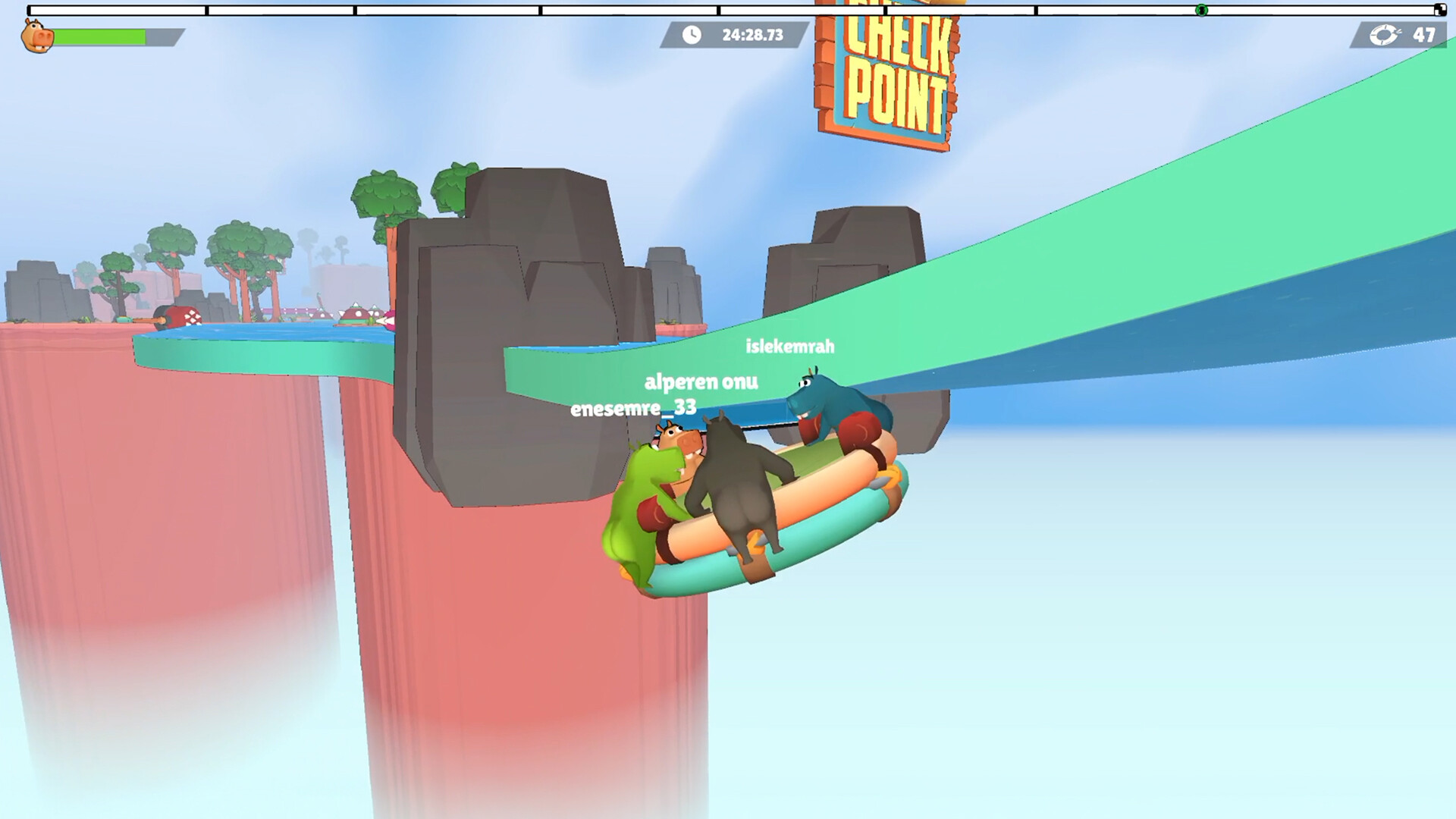
Why the demo has a player count and the full game does not
Fart Together ships as two separate apps on Steam. The demo is app 5208630 and it has been downloadable since 8 October 2026. The full game is app 5117550 and is listed for release on 29 October 2026.
Steam's public endpoint ISteamUserStats/GetNumberOfCurrentPlayers behaves differently for the two. The demo returns a real player_count. The unreleased app returns {"response":{"result":42}} — 42 is Steam's LimitExceeded result, which in practice means "there is no concurrent figure to publish for this app yet". It is not zero players. It is no data.
That distinction matters, because a fan site that prints 0 playing for an unreleased game is describing something that was never measured. We sample the demo instead and say so on the page.
Our own sampling · not an official live feed
1,684players at the last reading
- Sampling interval
- every 5 minutes
- Samples in window
- 7 samples across about 2 minutes
- Last successful reading
- 24 October 2026 at 03:25 UTC · 2 hours ago
- Peak / low in window
- 1684 / 1669 players
- Trend
- flat
- Source
- Steam ISteamUserStats/GetNumberOfCurrentPlayers
Every reading in this window
| # | Timestamp (UTC) | Players |
|---|---|---|
| 1 | 2026-10-24 03:23:17 | 1,669 |
| 2 | 2026-10-24 03:23:40 | 1,669 |
| 3 | 2026-10-24 03:24:01 | 1,669 |
| 4 | 2026-10-24 03:24:21 | 1,669 |
| 5 | 2026-10-24 03:24:41 | 1,669 |
| 6 | 2026-10-24 03:25:01 | 1,669 |
| 7 | 2026-10-24 03:25:22 | 1,684 |
App ID 5208630 (Fart Together Demo). Readings are appended by our own collector and stored in the repository, so anyone can check the raw series. Steam reports no public concurrent figure for app 5117550 before release, which is why the demo is the app being sampled.
What this number does and does not tell you
The reading is a headcount of people with the demo running at that moment. It is a good proxy for how many people are curious enough to have installed a free build. It is not a sales figure, not a wishlist count, and not a review score.
It also does not tell you whether those players stay. A demo attracts a burst of people who try one course and leave; the number can look healthy while retention is poor. If you want the retention story, the honest signals are the review count and the discussion activity on the store page, not a single concurrent number.
One more caveat: a two-minute window in the middle of a weekday says almost nothing about the daily peak. We publish the window we actually have rather than extrapolating a curve we did not measure. Over time this page accumulates a longer series, and the trend line becomes meaningful; right now it mostly shows that the demo is being played continuously.
Is 1,600-1,700 players a lot for a co-op demo?
For a two-to-four player physics game with no marketing budget behind it, a demo holding four figures of concurrent players ten days after release is a healthy signal, not a breakout one. Compare it with what the number actually needs to support: a lobby-based co-op game only needs enough simultaneous players for strangers to find each other. At this level, matchmaking is not the bottleneck.
The more useful question is what happens on 29 October 2026. That is when app 5117550 starts reporting, and the two numbers will no longer be comparable — a full release absorbs demo players, adds buyers who never touched the demo, and loses the people who only wanted a free trial. We will publish the full-game series separately rather than splicing two different measurements into one line.
How we collect it, and how you can check us
A small script calls the Steam endpoint, appends a line with the timestamp and the player count to data/players.jsonl, and exits. It is scheduled every five minutes. If the request fails, the script writes nothing and exits with an error — a failed read is stored as a gap, never as a zero.
The raw file ships with the site, so the numbers on this page can be recounted by hand. If a reading is ever older than it should be, the panel above shows the absolute time of the last successful sample along with how long ago that was; we would rather show an obvious gap than a fake "live" badge.
Source note: Player numbers on this page come from our own calls to Steam's public
GetNumberOfCurrentPlayersendpoint for app 5208630, written todata/players.jsonland published unedited, with timestamps. The claim that the full game reports no count is based on the same endpoint returningresult: 42for app 5117550 on 24 October 2026. Release dates come from the official Steam store listing. Nothing on this page is estimated.
What each number on this page actually measures
Three different numbers get called "the player count", and they answer different questions. Mixing them up is how a healthy demo starts to look like a dying game.
| Number | What it counts | Where it comes from | What it is good for |
|---|---|---|---|
| Concurrent players | People with the app open at one moment | Steam's public endpoint, sampled by us | Judging whether lobbies can fill right now |
| Daily peak | The highest concurrent reading in a day | Needs a full day of our samples | Comparing one day with another fairly |
| Visit or owner totals | Everyone who ever launched it | Store and third-party estimates | Nothing on a day-to-day basis |
Our window is short, so the middle row is the honest gap in this table: we can show you a concurrent reading today, but a meaningful daily peak needs a full day of samples, which we do not have yet. When we do, it goes in this table rather than into a sentence that sounds more confident than the data.
What happens to these numbers on release day
Two things change at once on 29 October 2026, and both make the old series unusable as a comparison. First, the full game (app 5117550) starts reporting its own player count, so there are suddenly two numbers where there was one. Second, the demo keeps its own count, and some of the people in it will move to the paid build rather than disappear.
That means we will publish the full-game series as a separate line rather than continuing this one. If you see a site splice the demo and the full game into a single rising curve, that curve is measuring a change of instrument, not a change in popularity. The release date and price questions live on their own page for the same reason: they change once, and then they are settled.
If you want to compare this number against something more stable while you wait, the Steam listing itself and the 12-point check on which Fart Together is which are both less volatile than a concurrent count.
Reading this number against everything else we publish
A single concurrent count is only useful next to other signals. Here is how we treat each one, and where you can check it yourself.
| Signal | What a healthy reading looks like | What a worrying reading looks like | Where we keep it |
|---|---|---|---|
| Concurrent players | Stable or drifting up across a day | Falling every hour with no event | This page, from our own samples |
| Review count | Growing slowly and steadily | Flat for days after a demo launch | The store page, not us |
| Community activity | Questions about mechanics | Questions about whether it is dead | Community channels, not us |
| Wishlist and release chatter | Growing as the date approaches | Silence in the final week | Store page and the release date page |
If a page anywhere tells you the game is dying because one reading dropped, check whether they are comparing the same measurement. Most of the time they are not.
Every row we store has the same three fields, so the series stays auditable:
| Field | Type | Example | Why it is there |
|---|---|---|---|
ts | ISO 8601 timestamp, UTC | 2026-10-24T03:25:22Z | Lets you recompute any window yourself |
players | integer | 1684 | The only measurement in the file |
appid | integer | 5208630 | Prevents mixing demo and full-game rows |
If you want the app IDs explained rather than the numbers, the Steam demo and download page covers which build you are actually running, and our Steam player notes cover what the store's own charts mean.
Fart Together player count FAQ
How many people are playing Fart Together right now?
At our last reading the demo had 1,684 players. The panel above is regenerated from our stored samples, so the figure you see is the newest reading we recorded along with its exact timestamp.
Why does Fart Together show no players on some trackers?
Because the full game has not launched. Steam does not publish a concurrent-player figure for an unreleased app, and trackers that show 0 are displaying the absence of data rather than a measurement.
Does the demo player count include the full game?
No. The demo is a separate Steam app (5208630) with its own player count. After 29 October 2026 the full game (5117550) will report separately, and the two series should not be added together.
How often is this Fart Together player count updated?
The collector runs every five minutes and appends a reading. The page rebuilds at most every five minutes as well, so the number you see is never more than a few minutes behind the newest stored sample.
Can I verify these numbers myself?
Yes. The raw series is committed to the repository as plain text rows of timestamp and player count, and the endpoint we call is public. Anyone can re-run the same request and compare.
Related Guides
Fart Together Steam Charts and Co-Op Demo Release Highlights
Track the latest Fart Together Steam charts, discover co-op demo details, and learn how players are steering rafts using physics-based mechanics.
Fart Together Steam Players Guide: Everything You Need to Know About the Co-Op Hit
Discover everything fart together steam players need to know about GamesMrkt's physics-based co-op raft game, demo details, and early access release.
Fart Together Steam: Everything You Need to Know About the Physics-Based Co-Op Hit
Discover Fart Together on Steam, the physics-based co-op game where 2–4 players steer a raft using fart power. Learn about gameplay, demo, and release details.
Fart Together APK and PC Downloads: Finding the Official Game on Steam
Looking for the fart together apk? Discover how to access the official PC co-op game on Steam, system requirements, and what to expect from the demo.
Fart Together Demo: Everything You Need to Know About the Physics-Based Co-Op Hit
Explore the Fart Together demo on Steam! Learn how to download, coordinate with friends, and master the hilarious physics-based raft survival game.
Fart Together Discord Community and Steam Co-Op Game Guide for Players
Join the Fart Together Discord and jump into the chaotic 2-4 player physics-based Steam co-op game by GamesMrkt releasing October 29, 2026.